
Brought together by the news
https://giving.usf.edu/impact/couple-brought-together-news-gives-support-wusf-interns?j=135119&sfmc_sub=22405544&l=42_HTML&u=3069445&mid=534000636&jb=1002&utm_campaign=MarketingCloud&utm_medium=email&utmhttps://giving.usf.edu/impact/couple-brought-together-news-gives-support-wusf-interns?j=135119&sfmc_sub=22405544&l=42_HTML&u=3069445&mid=534000636&jb=1002&utm_campaign=MarketingCloud&utm_medium=email&utm_source=INSPIRE+-+November+2023&utm_content=https%3a%2f%2fgiving.usf.edu%2fimpact%2fcouple-brought-together-news-gives-support-wusf-interns%3fj%3d%%jobid%%%26sfmc_sub%3d%%SubscriberID%%%26l%3d%%List_%%%26u%3d3069445%26mid%3d%%MemberID%%%26jb%3d1002_source=INSPIRE+-+November+2023&utm_content=https%3a%2f%2fgiving.usf.edu%2fimpact%2fcouple-brought-together-news-gives-support-wusf-interns%3fj%3d%%jobid%%%26sfmc_sub%3d%%SubscriberID%%%26l%3d%%List_%%%26u%3d3069445%26mid%3d%%MemberID%%%26jb%3d1002
December 2, 2023 No Comments
The demise of Enterprise Florida
Today was a sad day for Enterprise Florida; the last Board of Directors meeting. The Florida Legislature thought it best to eliminate the organization and its meager $12 million budget because they thought the government could do it better. Let’s just say, “I’m skeptical.”
During the past year alone, EFI has handled more than 50 projects, bringing 13,000 high-paying jobs to Florida and generating more than $3 billion in capital expenditures. And the Legislature thinks they are going to do it better?
So here’s a fond farewell to a public/private organization that has served Florida well for the past 27 years and to the amazing people who truly helped Florida excel. Florida, the Future is Here . . . just not for Enterprise Florida.

One of Many
Passion Rules!
June 7, 2023 No Comments
WUSF AWARDS
WUSF Public Media is proud to announce that journalists in the station’s newsroom received 16 awards in the Society of Professional Journalists Sunshine State Awards, including first place in eight categories for coverage of COVID, best newscasts, phosphate dangers, lost migrant children, the Florida panther comeback and more.
Winning 16 awards stands as a station record, topping last year’s total of 12, and well above prior years. Ten members of the staff were honored during a ceremony in Fort Lauderdale for their work in the calendar year of 2021
“I am immensely proud of the WUSF team for their wonderful coverage of vital issues to our state,” said WUSF General Manager JoAnn Urofsky. “Their body of work is a tremendous testament to the commitment these journalists have to delving into interesting and important stories to keep our residents informed.”
In a COVID-19 non-deadline news reporting category that featured entries from digital, print, television and radio from around the state, WUSF placed third for its Unequal Shots series on inequities in the distribution of coronavirus vaccines. Unequal Shots, which was produced by reporters Stephanie Colombini and Kerry Sheridan and edited by Julio Ochoa, also won first place in the radio health reporting category.
In the general coverage category, Steve Newborn received first place for his coverage on the dangers of Florida’s phosphate mines. Newborn also received a first-place award in the serious reporting category for “What Mosaic Is Doing With Its ‘Gypstack’ To Prevent Another Piney Point Disaster.” Newborn won a second-place award in the category of best use of sound for his story “Once Nearly Extinct, The Florida Panther Is Making A Comeback.”
Jessica Meszaros won first place for her story “Toxic Bus Tour Highlights Energy Inequality” in the environment, science and technology reporting category.
Sheridan took first place in education reporting for her story “A Florida Farmworker Talks About Why He Took His Teen Daughter To Work In Fields” and third place in the investigative reporting category for “Finding the Lost Children of Migrant Farmworkers.” Those pieces were part of Florida Public Media’s Class of COVID-19 series, which received first-place awards in the categories of continuing coverage and news website and a second-place award in the public affairs category.
Colombini also placed third in the continuing coverage category for her COVID-19 Vaccine Rollout stories. WUSF host Lisa Peakes and Assistant News Director Mark Schreiner placed first for best newscast for their entry All Things Considered Newscast, Aug. 6, 2021.
Reporter Cathy Carter received a second-place award in the light feature reporting category for her story, “Preserving Coastal Habitats Can Mitigate The Impacts Of Climate Change.” And The Zest podcast host Dalia Colon and producer Andrew Lucas won third place in the podcast category.
WUSF Public Media is a comprehensive media organization that serves the community and businesses through public broadcasting, digital resources and multi-media production services. Licensed to the University of South Florida, WUSF Public Media has been serving the public interest through programming, educational engagement and community partnerships for 58 years. For more information, visit www.wusf.org
Passion Rules!
September 6, 2022 No Comments
Three years ago today; Eulogy for a Hero
Col. Joseph S. Hice, USAF (RET), was born in Cherry Log, GA on February 28, 1928. While times weren’t always easy – growing up in Cherry log could never be easy – he led a good life.
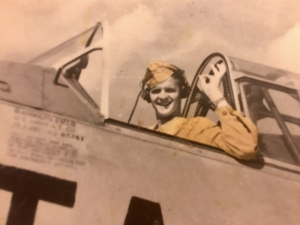
He would proudly tell everyone he met about the family farm and sawmill, the apple orchard and the railroad. If you knew dad for a day you knew he held the record for the 100-yard dash at Ellijay High School and Drove a school bus along North Georgia’s mountain roads when he was just 15.
That was about the time he began to dream of a life in the sky; being a pilot.
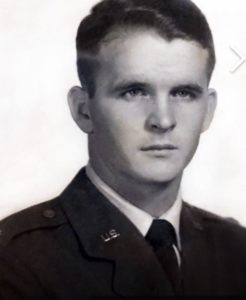 Dad joined the Army Air Corp when he was just 17. He tried to join earlier, but Mama Hice found out. That was not about to happen to her little boy.
Even though he wasn’t the youngest of the kids – that claim goes to Uncle Searcy – he was the smallest, but aviation fit him like a glove.
He became an officer candidate a little more than a year after he enlisted and entered flight school, the youngest in his class. And that was a big deal back then. He graduated, at the top of his class…
He also met our Mom, Phil, in Washington, after he completed his combat flight training. A friend had set him up with a blind and when my mom walked into the room – even before he met her – he said he was going to marry THAT girl. They were married for almost 60 years.
When they were dating he used to fly from Barksdale Air Force Base in Louisiana to Washington, D. C. on weekends just to see her.
From time to time he was known to do a flyover and Wing Wave down the valley in Cherry Log on his way back.
He went on to fly the T-3, Stearman, P-51 (his favorite), B-25, F-84, F-86, F-100, F-104, KC 135, B-52 and more.
He led the first flight to circumnavigate the globe without landing. 49 hours in the air. Can you even imagine. He retired after a magnificent 21-year career as a Colonel.
Dad was smart and good with people and that’s probably why the Air Force General Staff adopted him. He spent most of his time flying with Generals, Heads of State and other military leaders. He contributed his thoughts and ideas to running the Strategic Air Command.
He helped create the Looking Glass program which put aircraft in the sky 24 hours a day, 365 days a year during the Cold War. He helped keep America safe.
He saw the need for that program during the Cuban Missile Crisis when his squadron of U-2s and other reconnaissance aircraft – SPY PLANES — discovered Soviet missile sites on the island. They were pointed toward Florida.  He briefed President Kennedy about the situation and helped the nation, and the world, avoid World War III.
Following the Air Force he went on to a long career with Eastern Airlines where he was the chief flight instructor. If you flew Eastern during the 70s, 80s or 90s, chances were that dad and his team had trained the flight crew.
He never really retired. After Eastern he tried his hand at Real Estate. He could sell anything and was an active realtor until he was 90.
Speaking of selling anything, after our mom and the kids, he loved automobiles. The house in Miami usually looked like a car lot. In fact, it still does.
He probably owned more than 500 Pontiacs, Fords, Chevrolets, Ferraris, Porsches and Mercedes. Then there were the Cadillacs and Corvettes. Boy did he love his Cadillacs and Corvettes. When he died last month he still had two 1984 Corvettes sitting in the garage just waiting for him to find time to restore them.
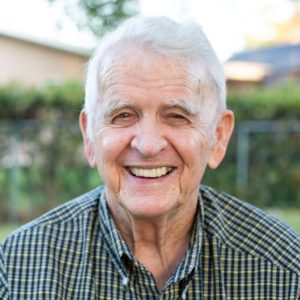 We are all going to miss Dad. He was an amazing father and role model. An amazing Grandfather and Great Grandfather. An amazing friend and mentor.
He led a wonderful life and we’re all so happy he was with us for so long.
So, after 91 years, it’s time to say goodbye.
So dad, as you used to tell us all, Fly Low and Slow … and keep the doors open.
Mom and a whole bunch of angels are out there who want to hitch a ride and fly with you.
10 – 4, Roger and Out.
August 26, 2022 No Comments
We love our pups
Lost our little girl Hominy Pearl suddenly on Friday, July 15. Thirteen and a half great years. From California to Tampa to New York to Atlanta and back with our daughter. In our hearts forever.
Now Grits McGee, our 17-year-old Papillon is not doing well. It’s tough with dogs. They really do become part of the family and it really hurts to lose them.


One of Many
Passion Rules
July 29, 2022 No Comments
Drunk Rudy! Best new meme ever

June 13, 2022 No Comments
Textbook Publishers rip off Florida Schools for almost $4.5 million last year
As a long-time Florida resident, I’m concerned about whistleblower information filed earlier this month with the Florida Attorney General that alleges textbook publishers McGraw Hill and Savvas have overcharged Florida School districts more than $4.48 million for K-5 ELA textbooks during 2020-2021. The practice appears to be widespread and ongoing and impacts school districts across the state.
Textbook publishers agree to provide the “Best Price” for all textbooks sold in Florida and that is not happening:
“As Florida Statute 1006.38 says, publishers must “(f)urnish the instructional materials offered by them at a price in the state which, including all costs of electronic transmission, may not exceed the lowest price at which they offer such instructional materials for adoption or sale to any state or school district in the United States. These variations in pricing seem to violate that statutory mandate. The Publishers affirmative pledges to follow the pricing statutes lead to the conclusion that false claims for payment were made against the State.”
At a time when school districts across Florida are struggling to fund the basic education needs of their students, teacher salaries and more, textbook publishers are lining their pockets and violating state law. This practice has been ongoing since 2003 as outlined in Oppage Report No: 03-28 (Office of Program Policy Analysis and Government Accountability ).
Here’s a list including the 13 of 16 Florida school districts included in the whistleblower information:
McGraw Hill overcharges:
· Miami-Dade County: ELA adoption last year in Kindergarten and 1st grade, Miami-Dade County was overcharged $1,245,888.88.
· Lee County: ELA adoption last year in K-5, Lee County was overcharged by $842,703.28.
· Hillsborough County: ELA adoption last year in Kindergarten, 1st grade, and 2nd grade, Hillsborough County was overcharged $782,253.18.
· Polk: ELA adoption last year in K-5, Polk County was overcharged $731,568.74.
· Hamilton County: ELA adoption last year K-5, Hamilton County was overcharged $19,383.55.
· Madison County: ELA adoption last year in just 1st grade, Madison County was overcharged $17,496.00.
· Franklin County: ELA adoption last year in K-5, Franklin County was overcharged $10,233.04.
Savvas overcharges:
· Alachua County: ELA adoption last year K-5, Alachua County was overcharged more than $128,878.
· Citrus County: ELA adoption last year K-5, Citrus County was overcharged more than $135,459.
· Franklin County: ELA adoption last year K-5 , Franklin County was overcharged more than $996.
· Okaloosa County: ELA adoption last year K-5, Okaloosa County was overcharged more than $176,917.
· St. Lucie County: ELA adoption last year K-5, St. Lucie County was overcharged by more than $164,125.
· Sarasota County: ELA adoption last year K-5, Sarasota County was overcharged by more than $92,676.
I have provided this information to School Boards in all the counties impacted and I’m hopeful they will address this issue and demand that the textbook publishers reimburse the system for the overcharges. The districts may also be eligible for “treble damages” for the overcharges. That’s money school systems throughout the state could use to augment struggling budgets and teacher salaries. They should also cease doing business with publishers who have failed to follow Florida’s guidelines for textbook purchases.
One of Many
Passion Rules!
May 27, 2022 No Comments
How Democrats can win in November
Elizabeth Warren knows how Democrats can win the midterms. It starts with canceling student loan debt
https://www.latimes.com/opinion/story/2022-04-21/elizabeth-warren-democrats-midterms-canceling-student-loan-debt
About 45 million Americans collectively owe $1.6 trillion in student debt. Elizabeth Warren and other experts believe Biden can legally cancel it.
April 22, 2022 No Comments
Free at last – Free college in New Mexico
Congratulations to New Mexico for becoming the first state in the nation to make all of its public colleges and universities tuition free regardless of income or immigration status. Now, it’s time to make all public colleges and universities tuition free in America.
April 5, 2022 No Comments
Tampa Bay Downs, a local gem, deserves more
TO JOHN ROMANO, Tampa Bay Times
Your Sunday column showed why you are always at the top of the list of sports columnists. You covered the strike from all angles and properly blamed both sides.
I know a lot of horse racing fans who would be happy if you wrote a column about Tampa Bay Downs on or before Saturday (March 12), when the eyes of the horse racing world will be focused on the Oldsmar track. Top trainers and jockeys from around the nation will be here hoping their shipped-in horse goes home with the majority of the $400,000 purse.
In addition to purse money, horsemen will want a share of the 85 qualifying points for a spot in the May 7 Kentucky Derby. The Tampa Bay Derby winner’s 50 qualifying points will all but guarantee a spot in the Derby.
After Derby points are recorded for the first four finishers Saturday, no more qualifying points will be available nationwide until March 26. But the trainers and jockeys won’t be the only excited ones and the only beneficiaries.
While the Downs is expecting a full house, fans and bettors around the nation will be focused on TV’s showing what is the most important race of the day. All the bets from other tracks and legitimate bookies will be directed to the local betting pools.
With bets coming in from around the country, the local parimutuel handle could reach $15 million, some of which goes to the state budget.
There are many fans at Tampa Bay Downs who bad-mouth the Times for never writing about the local track. I’d be glad to direct you toward some people who could be quoted.
A fact that is quoted often is that horse racing has continuously gone on since the track opened in 1926, and has been pleasing a certain breed of sports fan for more years than the combined years the Buccaneers, Lightning & Rays have existed.
So please consider applying your skills to what will be a major racing event and the biggest day of the year for Tampa Bay Downs, an employer of many local people and the source of much entertainment for many others.
Thank you,
Ron Stuart
March 7, 2022 No Comments